
African Wildlife
Photographs from Kenya, Rwanda, and Zimbabwe
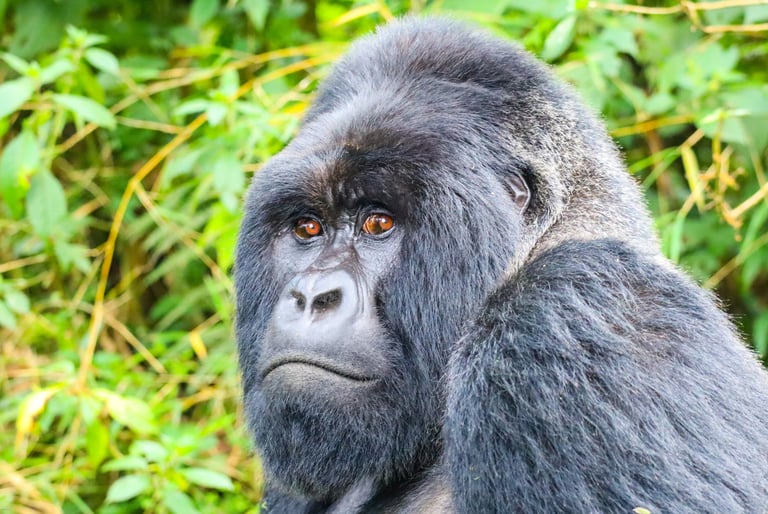
Mountain Gorilla
Rwanda
After more than an hour hiking up muddy mountain slopes in Volcanoes National Park, Rwanda, in August 2022, we found them — a family group of mountain gorillas resting in the bamboo forest. This silverback was unmistakably in charge. Moments after I took this shot, he rose and walked directly toward me, brushing against my hip as he passed. He wasn't being aggressive — just making a point. Around here, there's only one boss, and it isn't you.
Lion Cubs
Zimbabwe
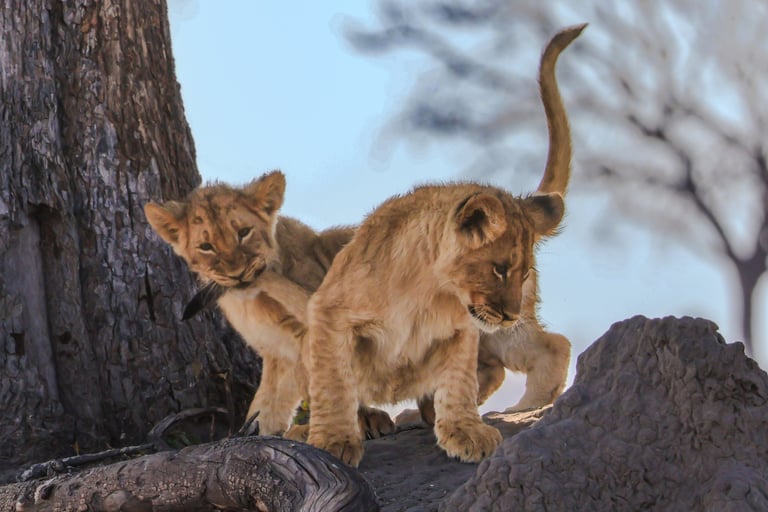
Two lion cubs at play in Hwange National Park, Zimbabwe, August 2024 — one of them has grabbed his sibling's tail and isn't letting go. It looks like pure mischief, but this kind of rough-and-tumble is exactly how young lions develop the coordination and instincts they'll need as adults. For now though, it's just fun.
Hippopotamus
Kenya
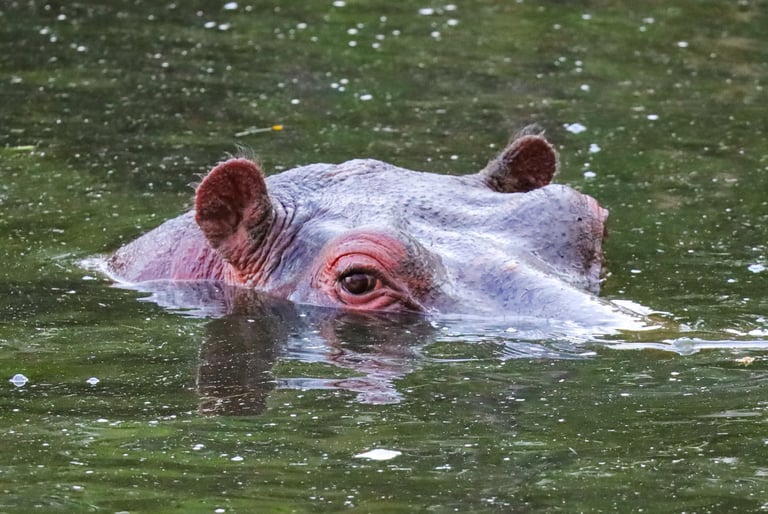
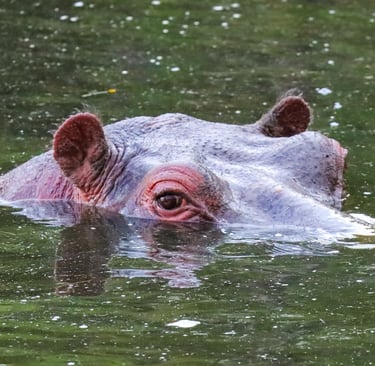
A hippopotamus keeps a wary eye on the world from the cool water of a river in the Mara Naboisho Conservancy, Kenya, 2022. Hippos spend most of the day submerged like this, protecting their sensitive skin from the sun. That reddish tinge around the eye isn't blood — it's a natural secretion that acts as both sunscreen and antiseptic. Don't let the placid scene fool you: Hippos are considered among the most dangerous animals in Africa.
Giraffe
Kenya
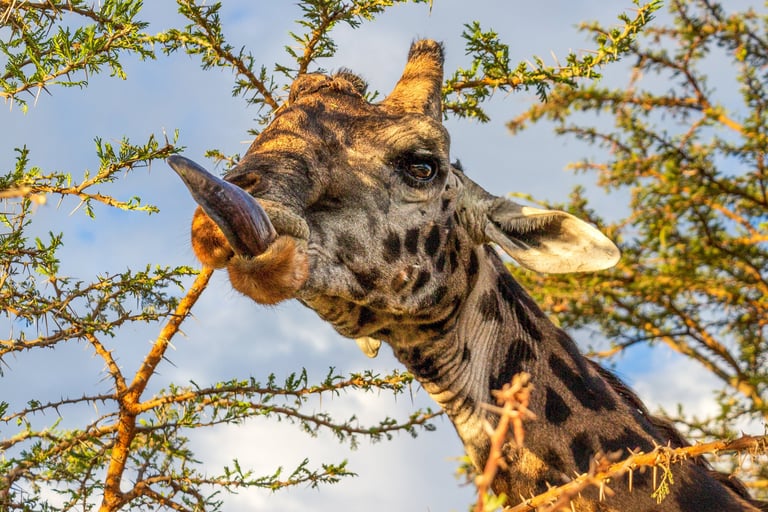
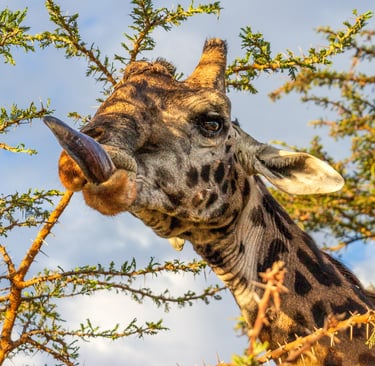
A hungry giraffe helps himself to lunch from an acacia tree in the Mara Naboisho Conservancy, Kenya, 2019. That extraordinary tongue — which can reach 18 inches long — is perfectly designed for stripping leaves from thorny branches. The dark color is thought to protect it from sunburn during all those hours of outdoor dining. He doesn't seem particularly bothered by the camera.
Dik-Dik
Kenya
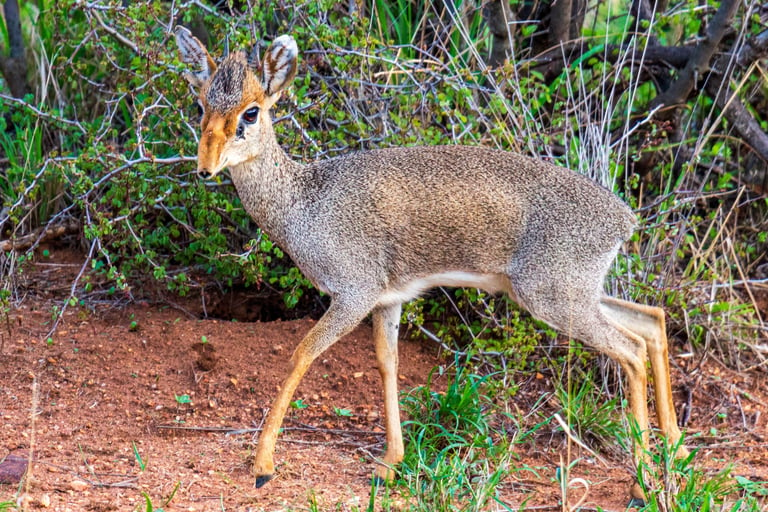
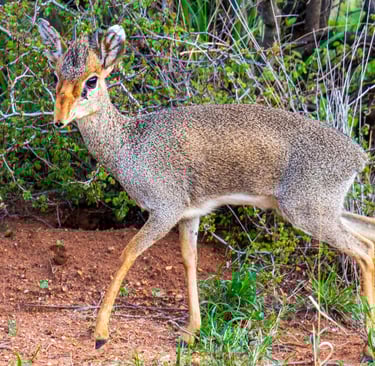
Meet the dik-dik — one of the smallest antelopes in Africa, and arguably the most charming. This one was spotted in the bush at Lewa Conservancy, Kenya, October 2019. Standing only about 16 inches tall at the shoulder, dik-diks are monogamous and mate for life, which somehow seems fitting for an animal this endearing. The name comes from the alarm call the female makes when startled — a sharp, repeated "dik-dik" sound.
Golden Monkey
Rwanda
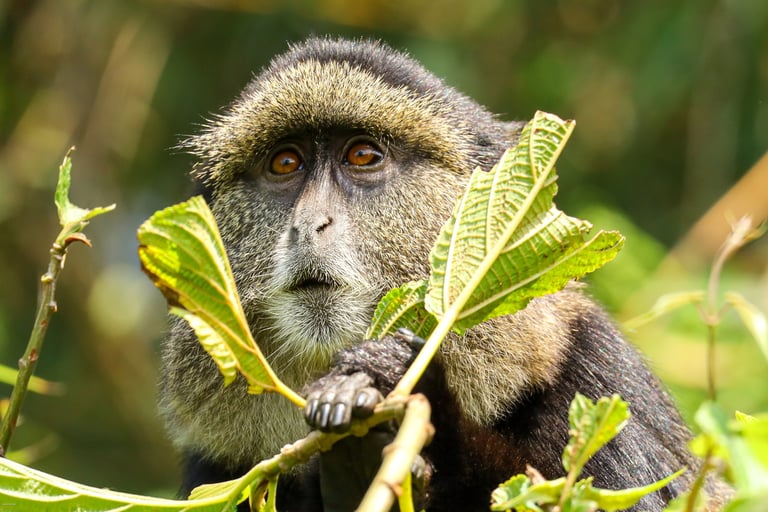
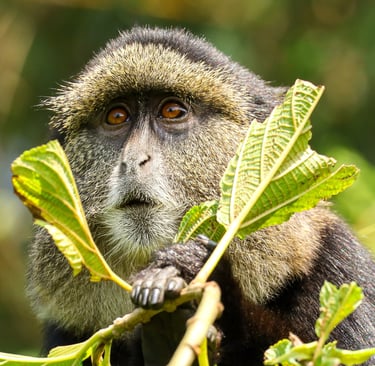
A golden monkey peers through the foliage in Volcanoes National Park, Rwanda, August 2022. We had come to the park to track mountain gorillas — and the gorillas didn't disappoint — but the golden monkeys were an unexpected bonus. Found only in the Virunga volcanic mountains shared by Rwanda, Uganda, and the Democratic Republic of Congo, golden monkeys are themselves an endangered species. It's hard to look at that face and not feel the connection.
Black Rhinoceros
Kenya
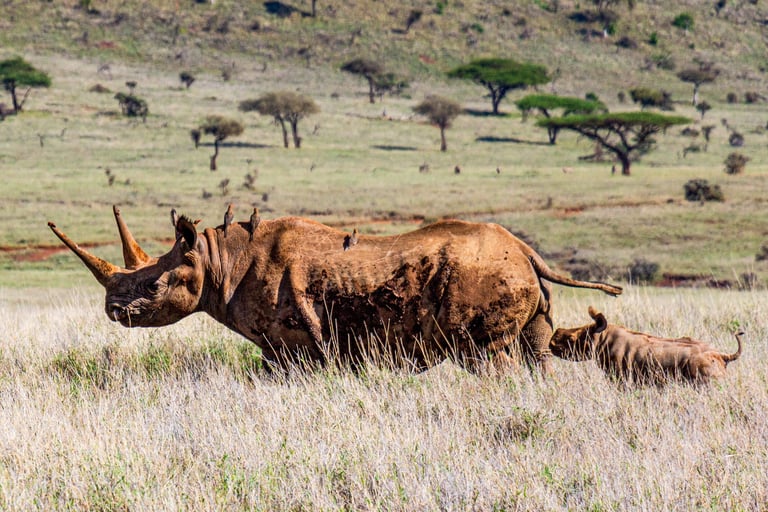
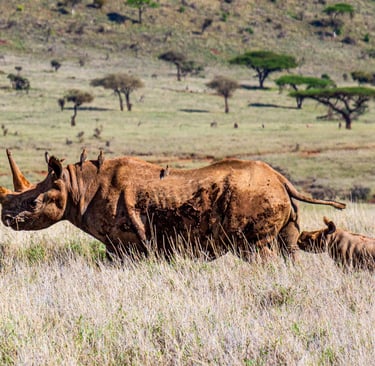
A black rhinoceros mother walks the savanna at Lewa Conservancy, Kenya, October 2019, her calf close behind. This photo was taken moments after she charged our safari vehicle — head down, full speed — stopping just inches from the bumper. We weren't sure she was going to stop. She was just being a protective mother, but it was an extremely effective reminder that black rhinos are among the most territorial and unpredictable animals in Africa. Fewer than 6,000 remain in the wild.
Leopard
Kenya
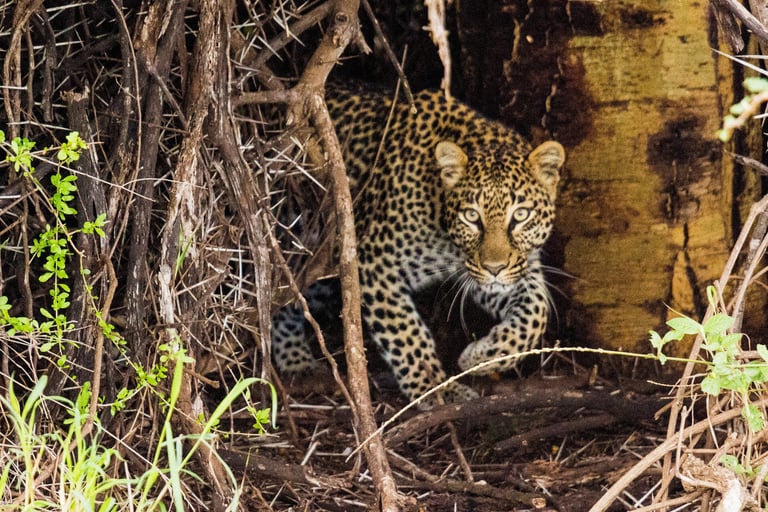
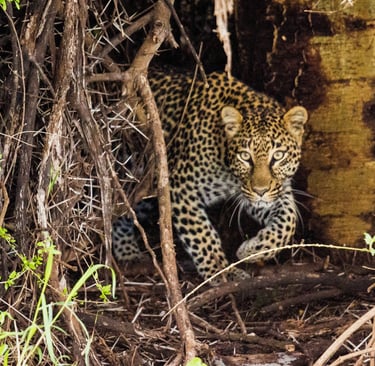
A leopard emerges from his den in the bush at Lewa Conservancy, Kenya, October 2019 — and looks us directly in the eye. We almost missed him entirely. Just after our encounter with the charging rhino, our guide noticed a group of monkeys in the trees nearby, all pointing downward toward the same spot. He positioned the vehicle accordingly, and we waited. And waited. He repositioned. We waited some more. Then, without warning, this leopard stepped out of the shadows, stared at us for a long moment, walked calmly past the vehicle, and disappeared into the distance at a run. The whole encounter lasted less than a minute. Leopards are notoriously elusive — many experienced safari-goers never see one in the wild. We got lucky.
African Elephant
Kenya
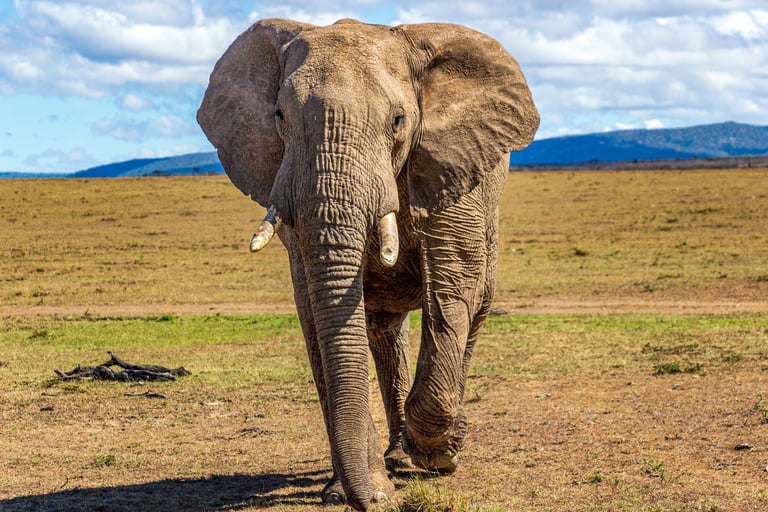
An African elephant walks directly toward us on the open savanna of the Mara Naboisho Conservancy, Kenya, August 2022. The largest land animal on earth, African elephants can weigh up to 14,000 pounds and live for 70 years. This one didn't seem concerned about us in the least — which, given the size difference, seems about right.
Thomson's Gazelle
Kenya
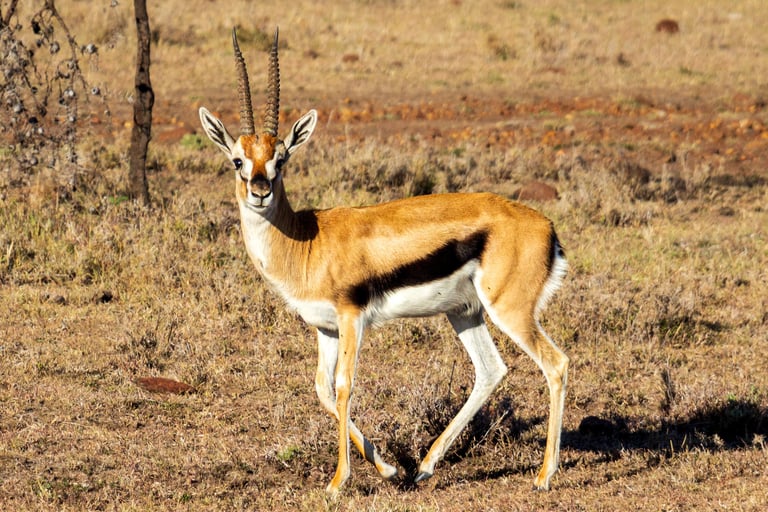
A Thomson's gazelle pauses on the open grassland of the Mara Naboisho Conservancy, Kenya, October 2019. One of the most abundant gazelle species in East Africa, "Tommies" — as they're commonly known — are a favorite prey of cheetahs, lions, and wild dogs. What they lack in size they make up for in speed, capable of reaching 50 miles per hour and sustaining a chase far longer than most predators can. This one looks alert for good reason.
Lion
Kenya
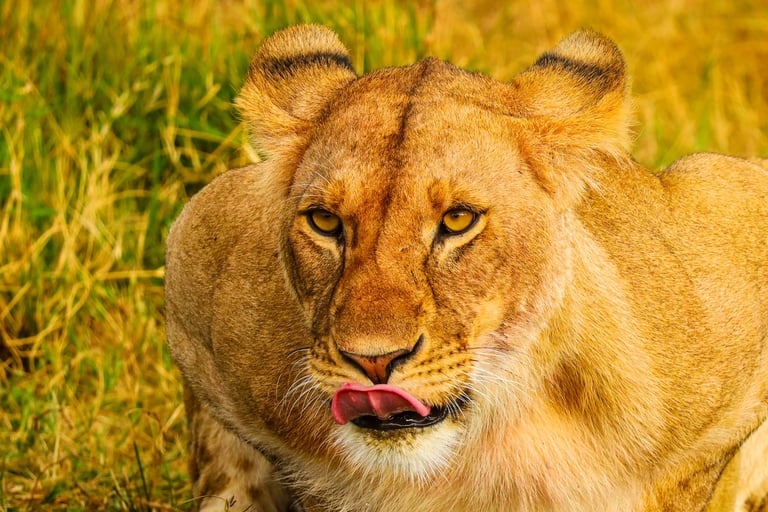
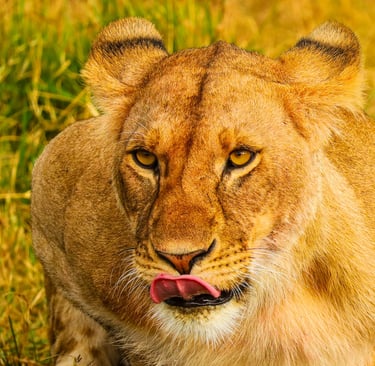
A lioness fixes us with her gaze in the Mara Naboisho Conservancy, Kenya, August 2022. The lip-lick is either a sign of contentment — or she's thinking about lunch. We chose not to ask which.
Cheetah
Zimbabwe
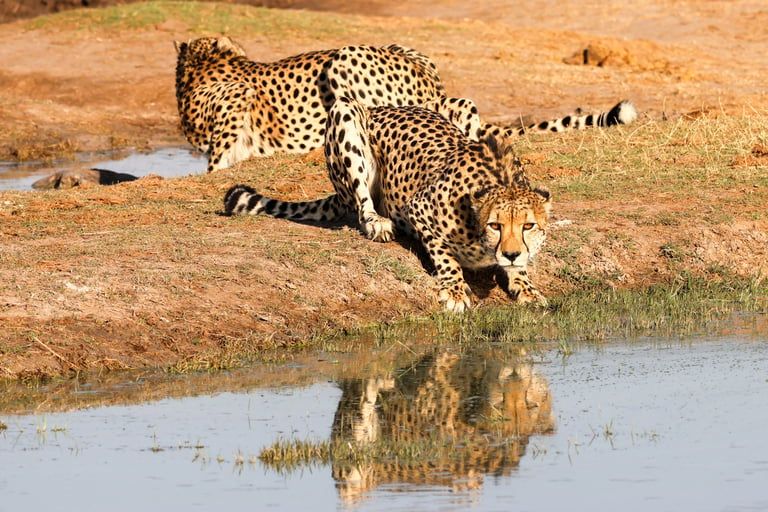
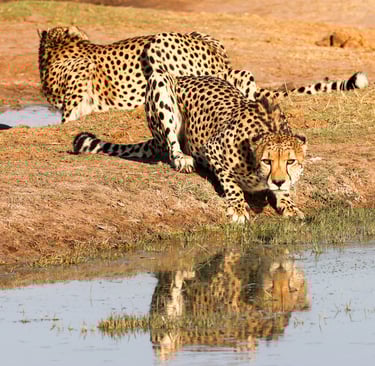
Two cheetahs pause at a watering hole in Hwange National Park, Zimbabwe, August 2024. One keeps watch while the other drinks — a classic division of labor that helps keep both animals alive. Even at rest, the focus in those eyes is unmistakable. The fastest land animal on earth, cheetahs can accelerate from zero to 70 miles per hour in just three seconds — but speed alone doesn't guarantee survival. Fewer than 7,000 remain in the wild.
Companion graphic art on Primal Gaze
Many of these photographs — the silverback, the leopard, the cheetahs, and others — also appear, transformed into graphic art, at primalgaze.com.