Birds in Flight (or not)
From the California coast to the African savanna
California Brown Pelicans
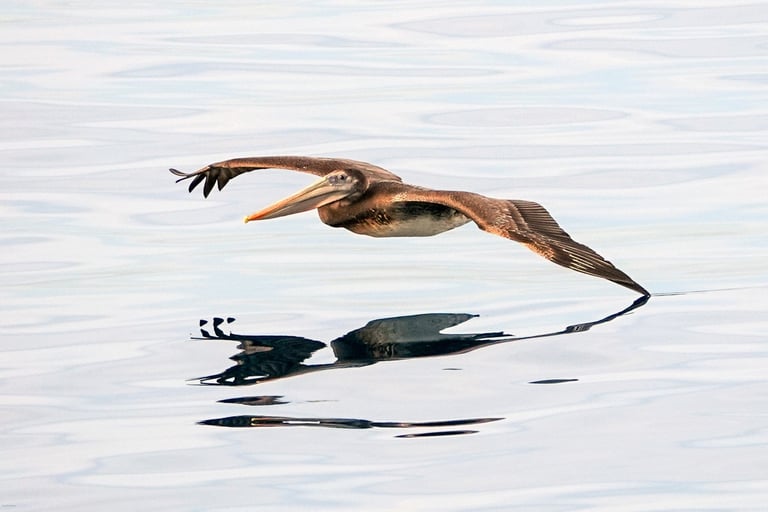
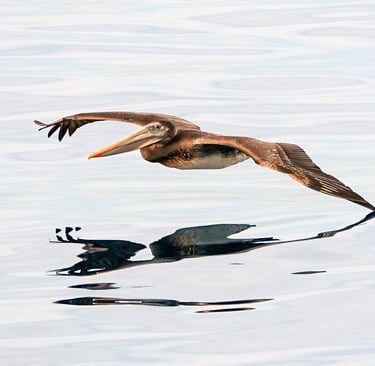
A California brown pelican skims the glassy surface of Newport Beach harbor, January 2022, its wingtip barely touching the water and its reflection mirroring every movement below. This is ground effect flying at its most elegant — the bird using the cushion of compressed air between its wings and the water to glide with almost no effort at all. It's one of those moments that makes you glad you had the camera ready.
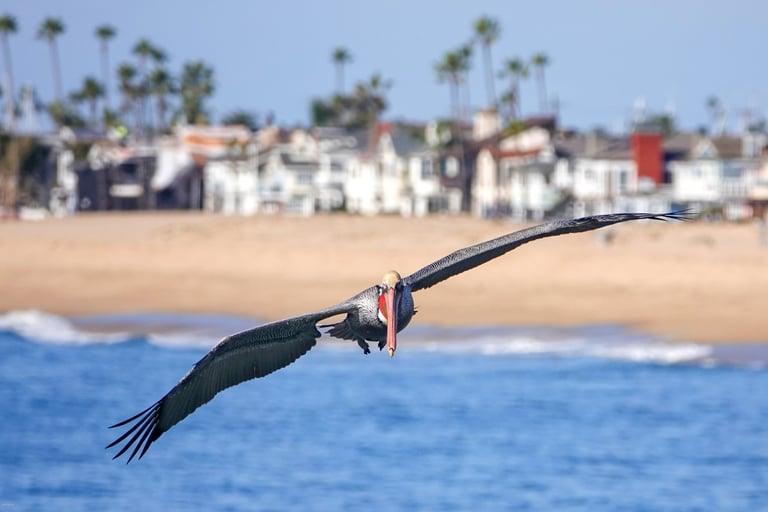
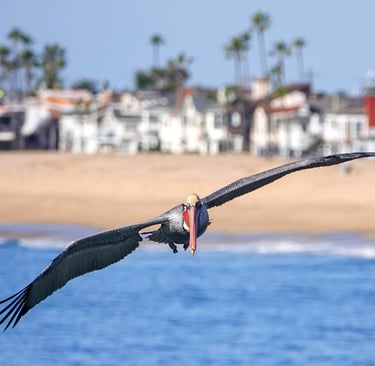
A California brown pelican flies directly toward us as we stand on the Balboa Pier, Newport Beach, December 2021, the homes of the Balboa Peninsula blurring into the background. With a wingspan that can reach seven feet, a pelican bearing down on you is quite a sight. That vivid red pouch — which can hold up to three gallons of water when scooping fish — is a reminder that this is a bird built for serious business, not just scenic coastal gliding.
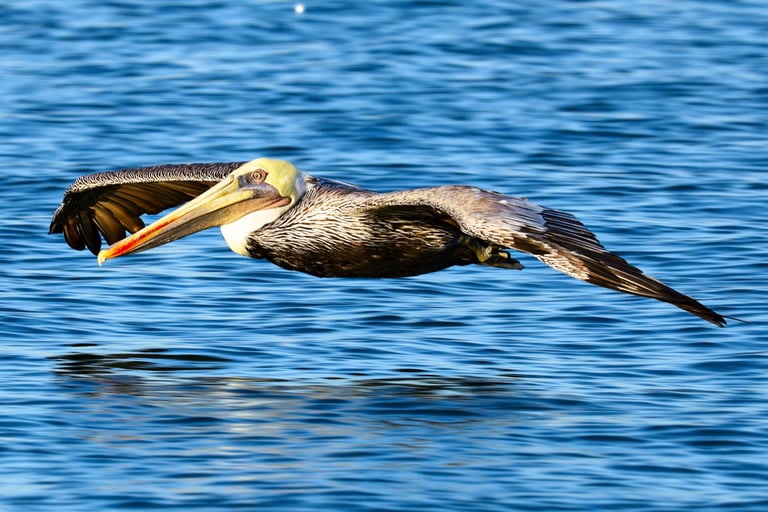
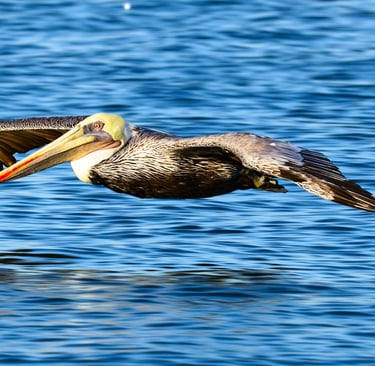
A California brown pelican glides just inches above the water off Newport Beach, California, December 2022. Once endangered due to the effects of DDT, the California brown pelican made a remarkable recovery and was removed from the endangered species list in 2009. A genuine conservation success story.
Great Blue Herons
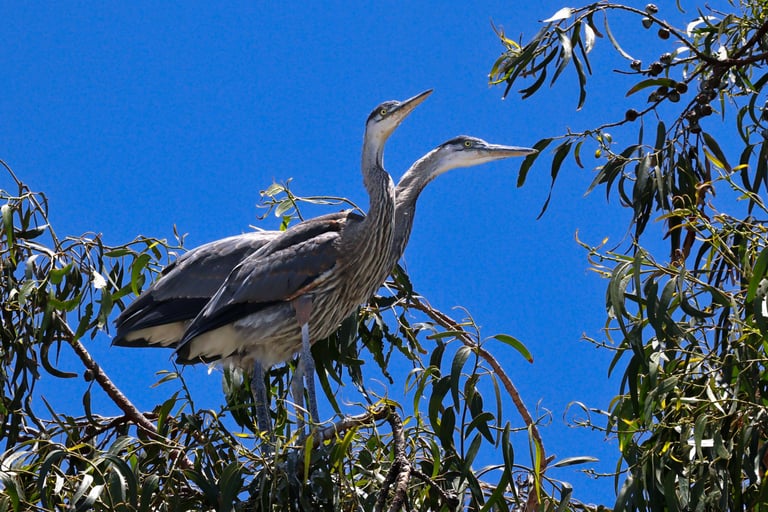
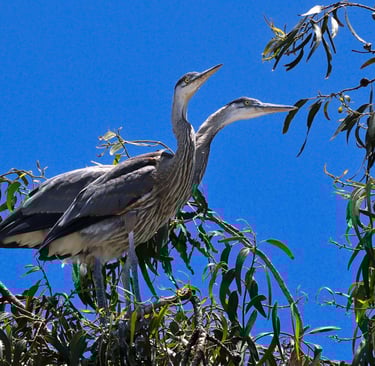
Two great blue herons keep watch from their nests high in the landmark blue gum eucalyptus tree behind the Newport Beach Public Library, 2023. For years this grand old tree has served as a beloved heron rookery, its upper branches hosting multiple nesting pairs each season. When the city announced plans to remove the tree to make way for a new library and fire station, residents rallied loudly in opposition — the "Save the Tree" movement drew national attention and packed city council meetings. The council ultimately approved the removal, which has now taken place. Whether the herons will find a suitable new home nearby remains to be seen.
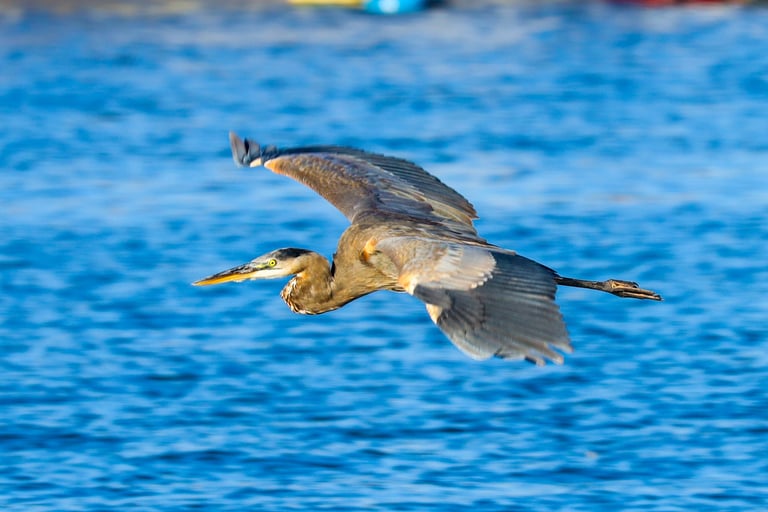
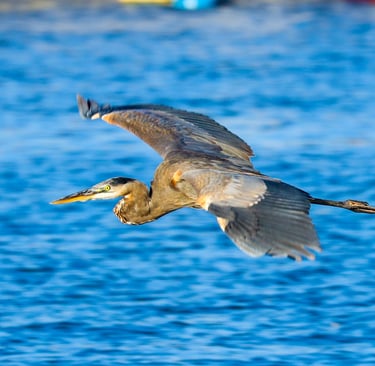
A great blue heron in full flight over the waters of Newport Beach, California, 2022. The largest heron in North America, great blue herons have a wingspan that can reach six feet — yet they weigh only about five pounds, their bones hollow and their feathers doing most of the work. In flight they fold their neck into a distinctive S-curve, which helps distinguish them from cranes, which fly with their necks extended. Those vivid green eyes don't miss much.
White-backed Vulture
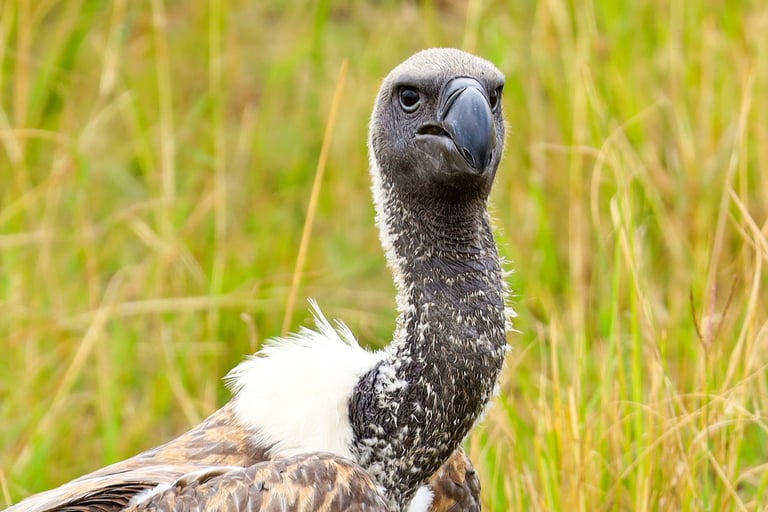
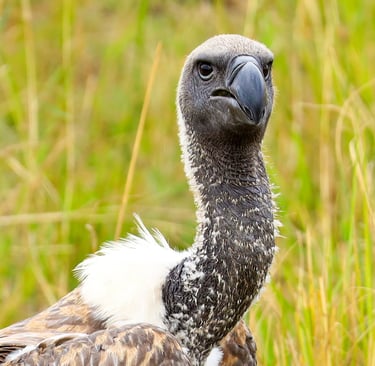
A white-backed vulture stares us down in the Mara Naboisho Conservancy, Kenya, August 2022. Vultures don't get much love — they're rarely anyone's favorite safari sighting — but they play an indispensable role in the ecosystem, cleaning up carcasses that would otherwise spread disease. This one's direct gaze suggests it has heard all the jokes and is not impressed. Sadly, white-backed vultures are now classified as critically endangered, threatened by poisoning, habitat loss, and the illegal wildlife trade.
Mourning Doves
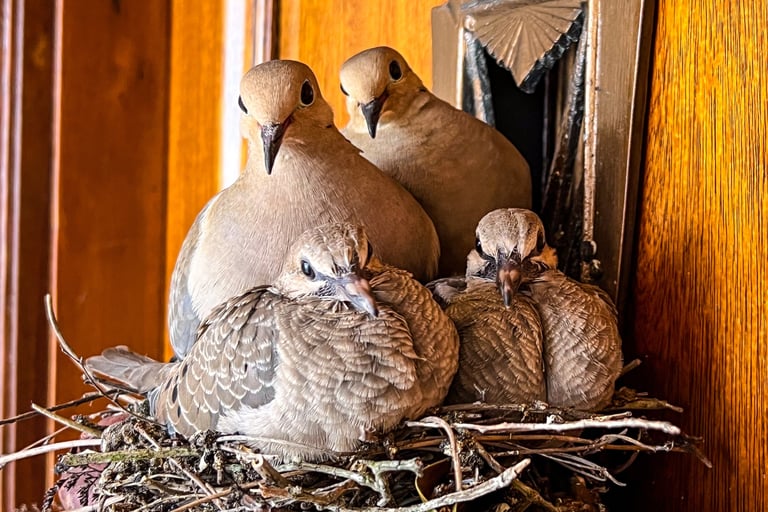
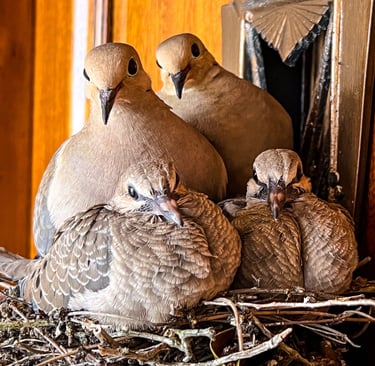
A pair of mourning doves tends to their nearly-grown chicks in a nest on my front door in May 2023. They chose the spot themselves — and despite the constant coming and going, they stayed put and raised their family undisturbed. Mourning doves mate for life and both parents share incubation and chick-rearing duties equally, which perhaps explains the calm, unhurried air of this little family portrait.
Snowy Egrets
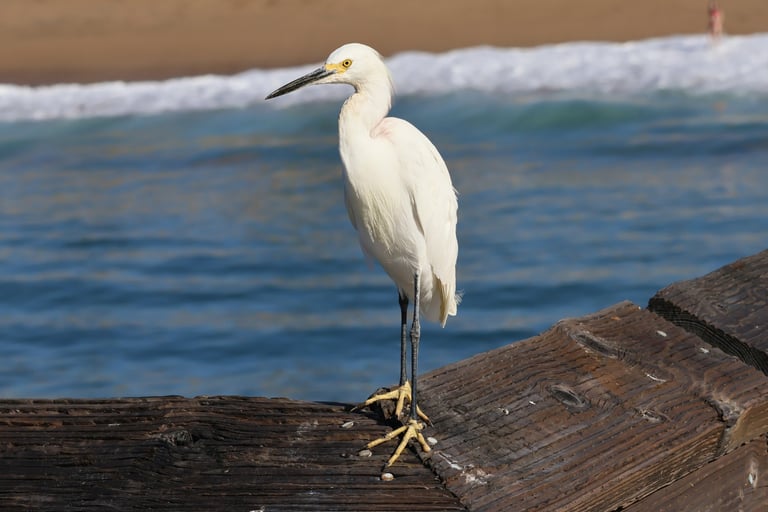
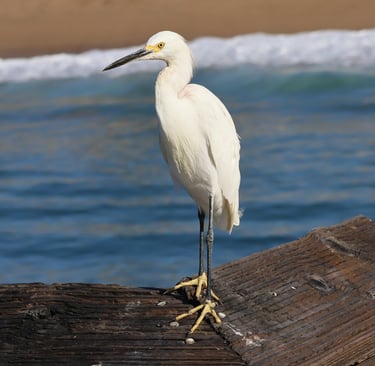
A snowy egret perches on the railings of the Balboa Pier, Newport Beach, October 2023, the breaking surf and sandy beach stretching out behind. Snowy egrets were once hunted nearly to extinction for their delicate plume feathers, which were fashionable in Victorian-era hats. Today they are a protected species and a common sight along the California coast — a reminder of what conservation efforts, when they come in time, can achieve.
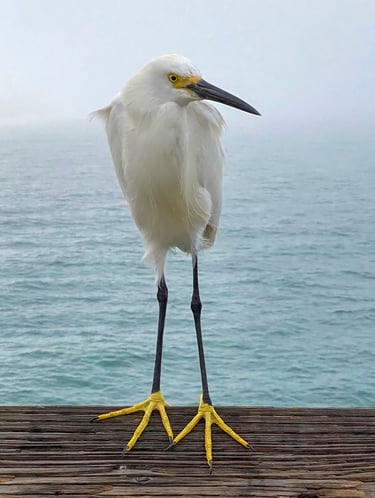
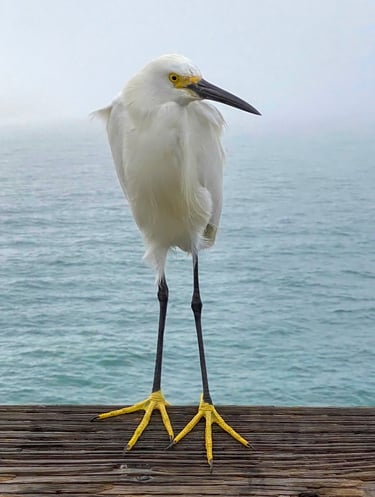
A snowy egret stands its ground on the Balboa Pier, Newport Beach, July 2021, on a typically foggy Southern California morning. Up close like this, those vivid yellow feet are impossible to miss — a surprising splash of color on an otherwise elegantly monochrome bird. The snowy egret is one of the few species where the feet are actually brighter than the bill, which is the reverse of most wading birds.
Western Gulls
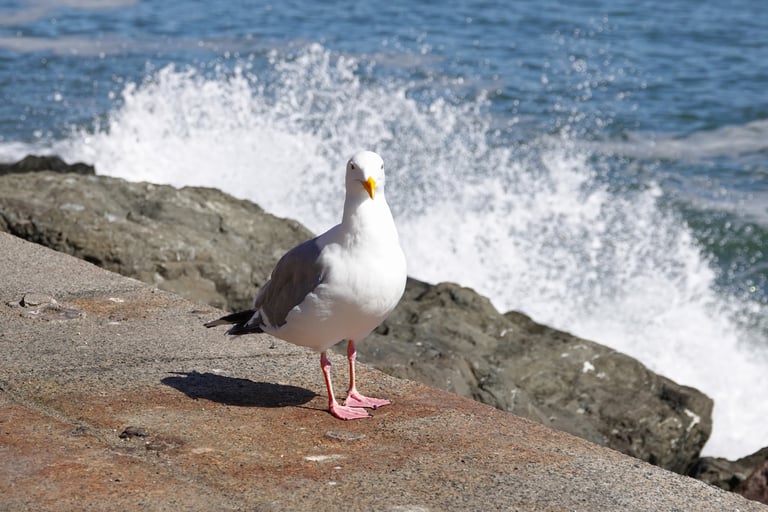
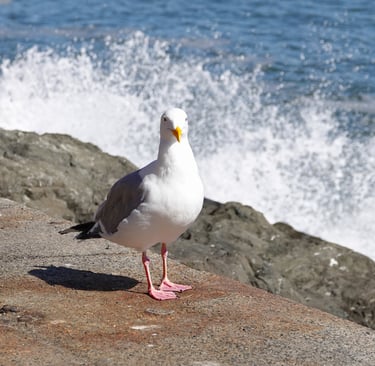
A western gull stands his ground on the rocks of the San Francisco waterfront, September 2021, as a wave crashes behind him. The western gull is the only gull species that breeds exclusively along the Pacific Coast of North America, and San Francisco's coastline is prime territory. He looks entirely unbothered by the surf — which, for a bird that spends its life on the water's edge, is exactly as it should be.
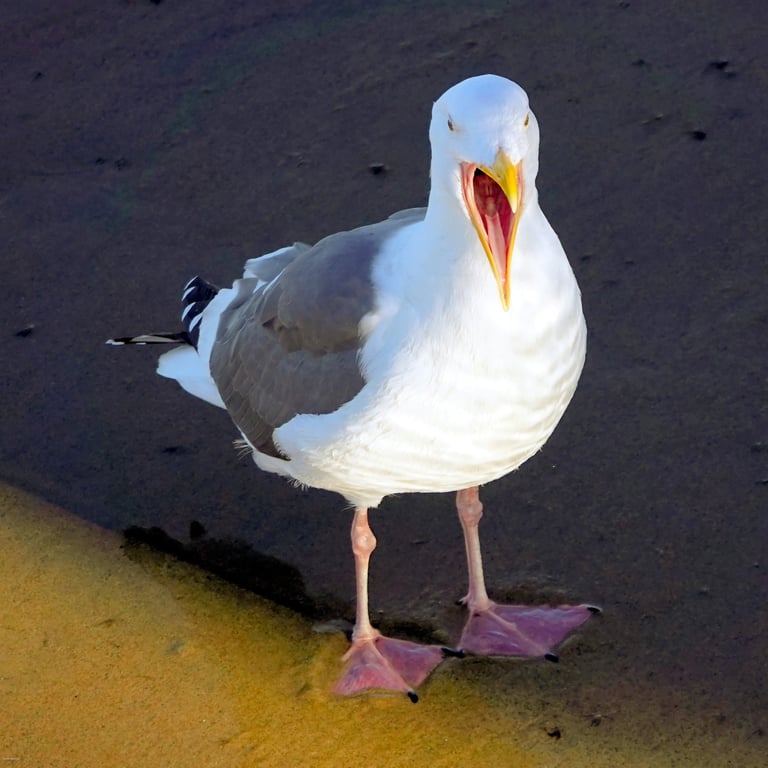
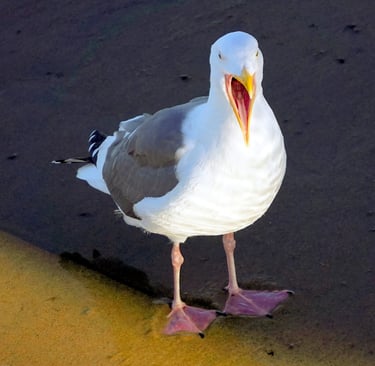
A western gull on the beach at Newport Beach, January 2022, with something to say. Gulls are among the most vocal birds on the coast, and this one appears to have strong opinions. About what, exactly, is unclear — but the delivery is confident.
Mallard Duck
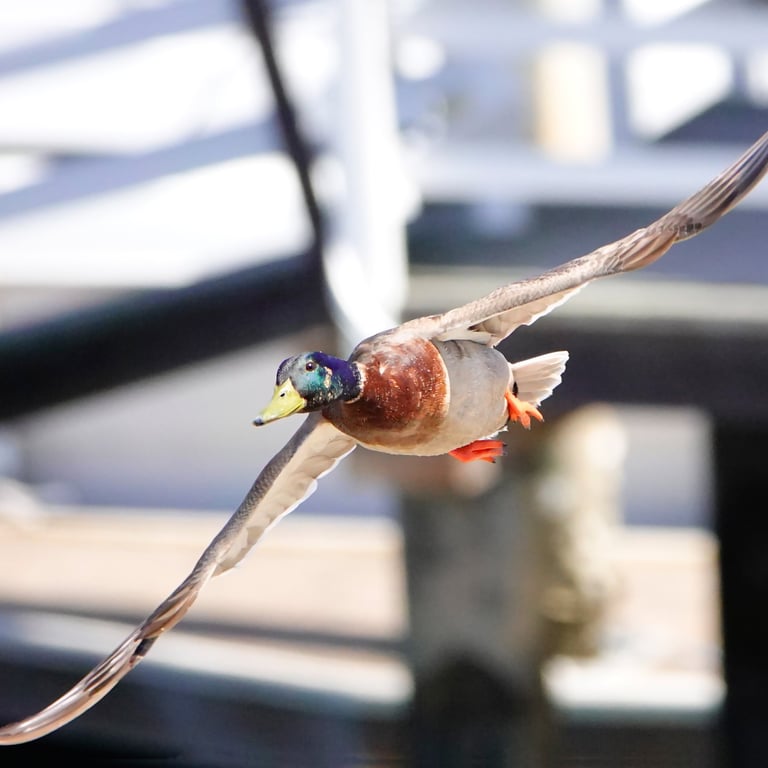
A male mallard — known as a drake — in full flight at Newport Beach, April 2021, his iridescent green head catching the light as he navigates between the dock pilings. The most familiar and widespread wild duck in the Northern Hemisphere, the mallard is so common that it's easy to overlook. Catch one like this though, wings fully extended, colors vivid in the sun, and it's a reminder that "common" doesn't mean ordinary.
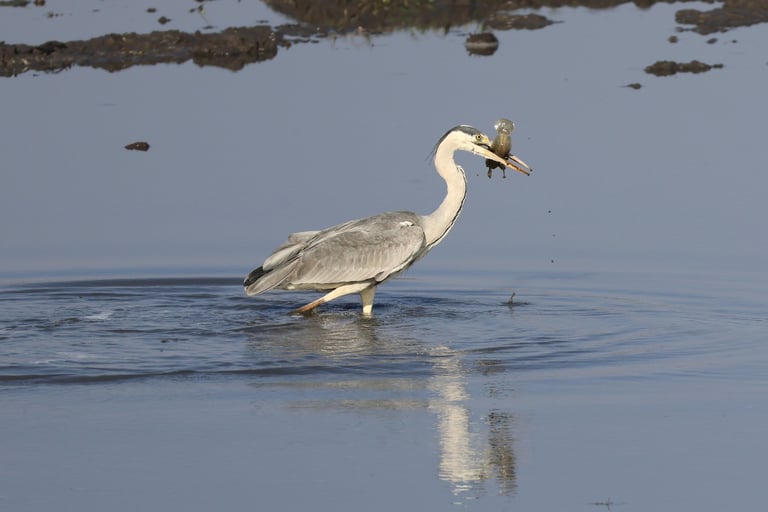
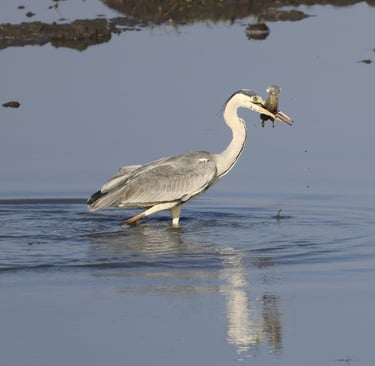
A grey heron makes a successful catch in the shallows of Hwange National Park, Zimbabwe, August 2024 — a fish that, until a moment ago, had no idea what was coming. Grey herons are patient, almost motionless hunters, capable of standing still for long periods before striking with lightning speed. The reflection in the calm water makes for a composed, almost serene scene — which is rather at odds with what's actually happening to the fish.